Events
Tuesday 02 June 2026 11:45 am
Saskatchewan Subsurface Lab, Regina, SK
SGS Speaker Series – Reefs and salts of the Devonian Souris River Formation and their lateral distribution in Southeast Saskatchewan – John Lake
Reefs and salts of the Devonian Souris River Formation and their lateral distribution in Southeast Saskatchewan
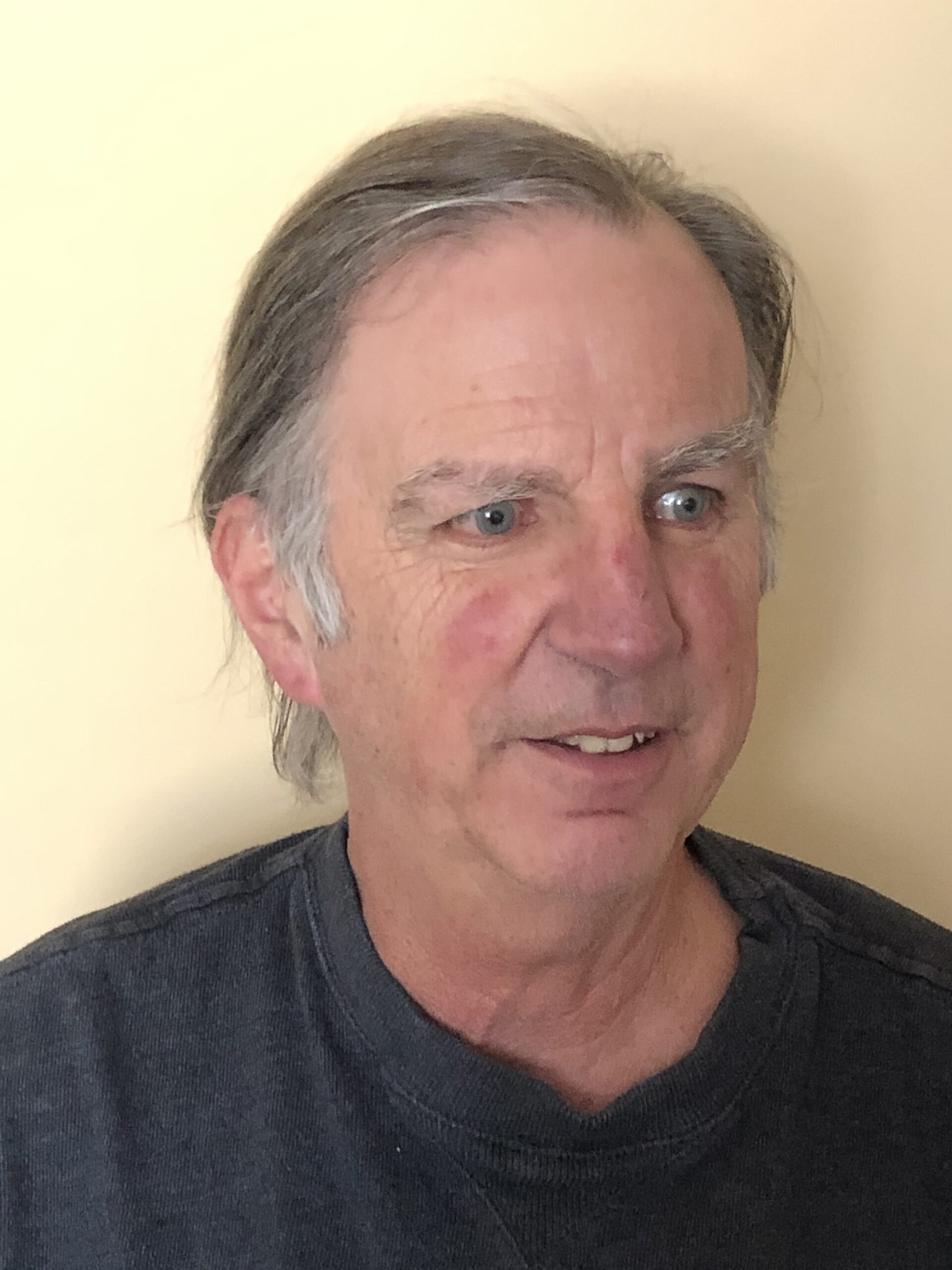
John Lake, Geologist, Lake Geological Inc.
Abstract
This core display will delve into the mysterious world of carbonate sedimentation during the Middle and Upper Devonian within the Elk Point Basin of southern Saskatchewan. CEGA has set a date of 2027 to update the Geological Atlas of the Western Canada Sedimentary Basin including the Saskatchewan Upper Devonian Chapter. Disappointing drilling results by the oil and gas industry resulted in the Devonian in Saskatchewan being ignored since the 1980’s, save for recent interest in Duperow lithium exploration (Devonian was King following the discovery at Leduc in 1947 and now that unconventional oil production dominates, experts are difficult to locate). Several recent fortuitous events made Devonian studies easier in Saskatchewan. The most significant is the Government legislation to recently remove Potash Pilot Hole cores off permanent confidientiality (Dr. Chao Yang prepared the list of 15 wells). The Potash mineshaft wells were often continuously cored from surface casing shoe into the Prairie Evaporite Beds. Unfortunately most of the cores are within the Saskatoon Potash District but this is still a unique resource for future generations of researchers. The revision of the Atlas gives us the opportunity to tie in the Manitoba and Saskatchewan history with the hydrocarbon-rich Alberta equivalent. The other fortuitous event was Steve Halabura recommending I describe the 8-34-22-33W1M PCS Bredenbury which turned out to be the eureka core for mapping the Dawson Bay Reef Margin (0n display today). Turns out the Hubbard Evaporite (halite) edge corresponds to the Dawson Bay Reef Margin and allow us to extrapolate the Margin from the Manitoba border to west of Saskatoon (Colin Dunn mapped the Hubbard Evaporite east of Saskatoon in in 1984 (Sask. Geol. Survey Report 1994)). The importance of Reef Margins is that they often develop on the upthrown side during active normal contemporaneous fault movement. The Hubbard Evaporite also marks an important Sequence Stratigraphic event and move of sedimentation in a basin ward direction. This destroys the preconceived concept that sedimentation occurred around the margin of the Elk Point Basin and in fact the basin was deepening in a northward direction (with drainage into Hudson Bay?).
Lane (1964) mapped the Davidson Subbasin which is infilled with three cycles of salt infill. The infill is asymmetric with a hinge to the north and here is interpreted as an extensional fault-bound pull apart feature. A similar extensional event in Canning Basin of Western Australia resulted in the formation of the Fitzroy Trough during Upper Devonian and is well documented since it is exposed at surface. The next step is to sort out the geology of the Davidson Subbasin. Who said that Saskatchewan Geology is layer cake and boring?
Bio
John received his Hons. B.Sc. in 1973 from the University of Waterloo in Ontario. He received his M.Sc. in 1977 from McGill University in Montreal, Quebec. He worked for Mobil Oil Canada in Calgary during the 1980’s. He worked for Saskoil from 1990-1995 in Regina and Swift Current, Saskatchewan. He has been a consulting Geologist since 1995 and specializes in core descriptions and sorting out stratigraphy in the Williston Basin. John did wellsite on the first five Geothermal Wells in the Deadwood Formation for DEEP Earth Energy Production Corporation. He has described numerous Deadwood Formation cores and presented Core Workshops for the Canadian Society of Petroleum Geologists (Calgary), Williston Basin Petroleum Conference Core Workshop (Regina) and North Dakota Geological Survey Core Workshops (Grand Forks, North Dakota). John enjoys sorting out environments of deposition based on evidence from cores.
Register Below:
Upcoming Events